Showing posts with label expat_in_germany. Show all posts

Jul 29, 2014

Almost German / Not Quite German

In light of Germany winning the World Cup earlier this month, a question came up that I couldn't help but ponder. The big win left me questioning how German I've really become, in addition to now being a lover of football. Living in Germany has undeniably changed certain aspects about myself, some I hadn't even realized until I gave it a good think.

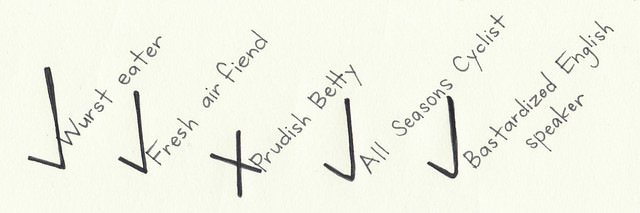
5 Signs That I'm Almost German
Untitled

  1. I’m not particularly proud of admitting this, but, I eat Wurst almost every day. Now I know what you’re thinking and no, I don’t each sausages every day. But Wurst is also the name given to sliced meat and my lunch almost always consists of a sandwich containing Käse, Gurken, Tomaten and Wurst. Hey, at least I’m not a slave to canteen food like all of my students are. The canteen at the company where I work, by the way, serves Currywurst every day.

  2. I value ventilation like I’ve never valued it before. When in doubt, open up a window. You’ll automatically feel better. Not only does it remove the lingering smell of cheap cologne worn by businessmen in the office, it also helps to remove the feeling of stuffiness in your flat. I know this because I learned it from the Germans, a people obsessed with ventilation and who throw open their windows (albeit briefly) even in the wintertime!

  3. I’ve thrown all notions of prudishness out the window. Let’s face it: North Americans are prude. Period. Especially in the eyes of Germans, who are comfortable with nudity and actually open about sex. I feel like I grew up in a completely opposite society and culture, and almost feel liberated now that I live in Germany. Case in point: in the change rooms at my gym, women of all shapes and sizes change and shower with brazen confidence. They don’t bother trying to cover themselves up with towels or what have you. I’ve even seen women have full-on conversations with each other in the nude!

  4. I ride my bike in spring, summer, autumn and oh yes, even in winter. Expertly too. Nobody thinks I’m crazy for biking in rain or snow because everyone does it. The Germans say Es gibt kein schlechtes Wetter, nur falsche Kleidung. In other words, there’s no such thing as bad weather, but rather, inappropriate clothing. While I prefer to wear rain pants, a rain jacket and waterproof shoes, it’s typical to see people donning a poncho or holding an umbrella while riding in the rain.

  5. When Skyping or FTing with friends and family back home, I have to resist the urge to start off by saying naaaaaa and inserting German words such as doch or egal throughout the conversation, for they’d likely respond with a clueless ‘huh?’ The thing is, there are so many German words that I wish we could adopt in English. The reason why I admittedly enjoy peppering my English with German words is simply because these words fit so well in context yet do not have direct English translations or, when translated, don't express what I'm trying to say as fittingly.

So there you have it. I'm probably, say, 25% German? Am I therefore a mere 75% Canadian? However which way you want to break it down, there are definitely qualities about me that aren't German-like.

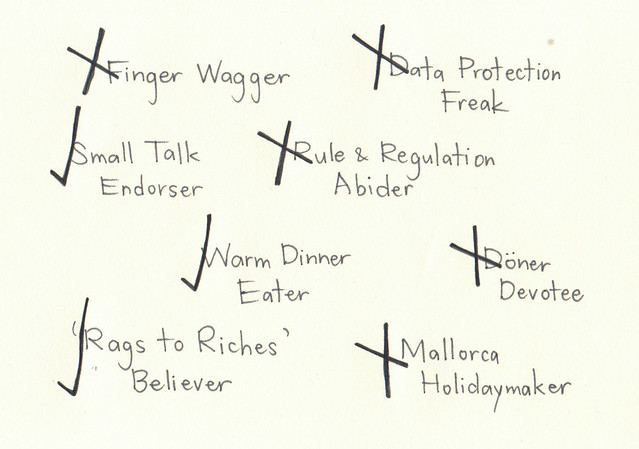
10 Signs That I'm Not Quite German
Untitled

  1. I can’t say I love making small talk but I definitely don’t mind it when the person I’m talking to gives me something to work with. Conversely, Germans hate it. What we believe is essential for networking and for building good relationships, they think is a waste of time. The problem is Germans think that when English speakers make small talk, it’s superficial. It’s hard for them to comprehend that asking someone “How are you?” isn’t necessarily meant to inquire about one’s life in detail. This is because in German, Wie geht’s Dir? is indeed meant to sincerely inquire about one’s (oftentimes personal) life and normally only asked by close friends and family.

  2. I don’t care if people choose not to follow rules and regulations and I most definitely will not wag my finger nor scream at a jay-walker. Germany is a land of rule and regulation abiders, which is fine by me. But we do live in a free society, no? If someone chooses to jay-walk, that’s his or her decision and I’m not wasting energy or my emotions on denouncing that person.

  3. I’ll never learn to be as direct as Germans are. Countless times I’ve experienced (mostly old) people scream at me for things like biking too close to the sidewalk and I find it utterly tasteless. Germans have no shame giving you a piece of their mind, whether you’re a stranger to them or not. In the business world, assertiveness is also the name of the game. Some of my students feel uncomfortable saying “could, would or should” because they think these words express uncertainty. When translated into German, these words communicate indecisiveness and therefore weakness. While they're polite to use in English, in German they're not explicit enough.

  4. Germans are generally wary when it comes to data protection and privacy but unlike them, I don't feel compelled to change my name to Sh Elley on Facebook. I don't blame them, what with the spying going on and all. No one seems worried about their own cell phones being tapped though.

  5. Döner will never be my go-to fast food meal. I rarely even eat fast food, let alone döner. Nevertheless, I get why it’s so popular. It’s relatively affordable, a Dönerbude is never more than a hop, skip, and a jump away and it's filling. But it leaves this nauseating smell on your hands that doesn’t go away for days. No, you cannot eat Döner with a knife and fork.

  6. I haven’t been to Mallorca, which the Germans themselves have deemed their “17th province.” It’s such a popular holiday destination for Germans, you don’t have to worry about not being able to speak Spanish if you plan to go there - everyone speaks German. Although the thought of visiting Mallorca is tempting since it’s cheap to fly there from virtually any city in Germany, I’d like my next major trip to be a destination far different from Europe. China, perhaps?

  7. My 1s don’t look like 7s and I promise you, they never will. Germans were taught how to print certain numbers and letters in school differently from how I remember being taught. If you ever ask a German to write the number 1 on a piece a paper, there’s a 99% chance that instead of it looking like a lower-case l, it’ll consist of two lines, both of which touch the baseline and the cap height. It basically looks like a deformed 7. Ask a German to print out the whole alphabet for you and you’ll see that their letters have loopy qualities, similar to that of cursive.

  8. If I were able to have one warm meal per day, I’d prefer it to be dinner. Traditionally, German children got off school early enough in time for a late lunch at home where they’d usually have a warm meal. These days it's common for adults to enjoy a warm lunch as they either eat out with colleagues, or as I mentioned before, they eat in canteens. As a result it was and still is common to have Abendbrot (literally ‘evening bread’) in the evenings. To be fair though, due to changes in lifestyle, instead of just bread with sliced meat and/or cheese, nowadays more and more families are having warm meals for dinner as well.

  9. I don’t believe qualifications are the keys to success and that the more education and experience you have, the more successful you will be. This is very typical German thinking. Germans jeer at the idea of ‘rags to riches’ as being only possible in Amerika (aka the US). They’re super structured people so it’s hard for them to wrap their head around getting to the top without taking the qualified route. They don’t like taking risks and that’s why entrepreneurialism isn’t prevalent in cities that aren’t Berlin. In my opinion, the average, middle-sized German city lacks restaurants and shops that are truly daring in concept because no one is brave enough to open one up.

  10. Saved for last because it hits home the most, I can never be a true German because I know how to queue. A simple concept but one that has bestowed upon me many aggravating experiences. You may already be aware of such horror stories in German supermarkets where a new cashier opens up and everyone in the original queue tramples over one another to be first in line in the new queue. There exists zero courtesy in these instances. Sheer malarky! I see this all the time and it never ceases to make my blood boil. C'mon, Germans! Look to the Japanese and Canadians as good examples: apparently they're the world's best queuers.

Untitled

I've proved that although Germany has moulded me in some ways, much to my sister's relief, I am and I'll always be Canadian. I sometimes wonder how I'd have turned out if I hadn't moved here. Would I still be prudish? Would I have learned how to bike in the snow? Would I have even bothered to learn a second language? I don't think so. And that's why I find the idea of living abroad so fascinating. Without even realizing it, you're influenced by the culture you're surrounded by. This is precisely why I think travelling is so important for one's growth, and also why I think being an expat is so verdammte fulfilling.

Jun 16, 2014

The one thing no expat/bookworm should live without


Believe it or not, I was once a technology hater.

I was anti-eReader, to be exact. I scoffed at the preposterousness of a "pageless" book. If I still lived in Canada, I'd have the same opinion today. But if you, too, are a native English-speaking bookworm living in a country where English isn't the first language, your opinion will change. You start to miss not being able to browse through a vast array of glossy new bestsellers at the local book store. After a while, that one measly shelf devoted to English novels just doesn't suffice. Don't get me wrong, I enjoy reading the latest issues of Jamie Oliver's magazine in German. But sadly, neither a German nor an English version of Saveur (or Monocle or Bon Appetit, for that matter) can be found in any of the book stores here.

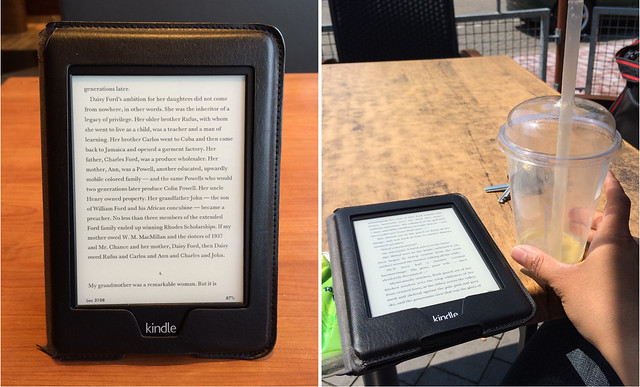
Good news: there is a bright side. Nowadays I can conveniently find almost every book I'm in search of on my eReader, which happens to be a Kindle Paperwhite. What's more, e-books are usually less expensive than their paperback counterparts. Bad news: most of the aforementioned magazines aren't offered on the Kindle Paperwhite. But on to more advantages... in theory, thousands of books can be stored on this sleek, light, portable device. No more lugging around 3-4 books in my backpack on vacay!

Even in daily life, the eReader is anything but cumbersome to carry around. Just like my wallet, cell phone and Swiss Army knife, I never go anywhere without it. The reason is not because I'm always in the mood to read, but because as a freelance English teacher, you're bound to have no-shows every now and then. What to do with one's time when a lesson is cancelled on super short notice? Whip out one's eReader, of course! Would-be 90 minute holes in my schedule become opportunities to immerse myself in the world of words, which is never a waste of time.

Now I know what you're thinking. What about the joy of reading back covers and being enticed to purchase books with convincing blurbs? If you are one to spontaneously purchase books based on their blurbs, I'd find it hard to believe you've never been disappointed before. In contrast, the chances of this happening with a Kindle are slim. If an e-book interests you, you may download a free sample of it (usually the first 1-2 chapters) prior to purchasing it. So far, this feature has meant that I've never been able to put down any of the e-books I've bought. And to think that I'd always incurred charges on overdue library books that I hadn't even read! Let's just say that since I've had my Kindle, there's been no need to renew my membership at the Stadtbibliothek.

Obvious fact: I am pro-eReader. That's not to say that I don't read classic paperbacks anymore. I often borrow novels from friends and admittedly revel in the feeling of being able to flip actual pages. Truly, the printed page has not died. Yet, that is.

Aside from their physical differences, there really is just one defining feature between the paperback and the Kindle that I believe puts the latter on a pedestal. Every Kindle comes equipped with a built-in dictionary. Whilst reading, one need only select a word (i.e. touch the word on the screen) before being instantaneously given its definition. Gone are the days of underlining unfamiliar words in pencil, sticking Post-its on the page and vowing to look up the words later (which, let's face it, you never did). The e-Reader has changed the way we read, my friends. There's no looking back from here.

Let's not get carried away, though. The Kindle is not without its disadvantages. I should be allowed to share my e-books with other fellow Kindle users. Despite all the websites and forums stating how one goes about doing this, I've deemed this impossible presumably because my Kindle is signed up with an amazon.de account. Furthermore, the Kindle's responsiveness to the finger's touch could be much faster than it is. Whenever I touch the screen, it feels like there's a nano second delay before the screen realizes that I've touched it. Hardly comparable to the speed of today's latest Smartphones.

Without a doubt, there are kinks the Kindle needs to work out. Still, as an expat abroad and avid reader of English books, it's become a product I cannot live without. I've chosen to live in Germany; I've accepted the fact that I have to find alternative ways of quenching my thirst for the things I took advantage of being surrounded by before (namely, books in English). Ordering books online would've been another alternative to buying a Kindle, but since I plan to move to another country next year, what would be the point of accumulating more stuff? It seems to me the Kindle is the perfect companion for every late cancellation sufferer/expat/bookworm/traveller out there. Naysayers may comment below.

Dec 19, 2013

OMG, I'm in an English-speaking country!

Surprise, I'm home! Just for the hols though and not even for Silvester. Phooey. And what did I do as soon as I landed? I indubitably got myself a Tim Horton's coffee. French Vanilla to be precise. The morning after I landed, I indulged in this luscious bowl of steaming hot oatmeal topped with maple syrup and berries. It's so damn good to be home, man. Don't get it twisted though: I've missed my mom's homemade cookin' more than I've missed Timmie's. #keepinitreal


Whenever I fly back into Toronto, I'm always overcome with a strange yet familiar sensation. I mean I'll always consider Tdot "home" but when you're gone for such long periods of time, you just can't help but look at the city differently whenever you visit again. As much as I love my city, I can't picture myself living here in the next while (if ever). The reason being that there's too much of the world I still need to see! Plain and simple as that.

I don't know if anyone can relate to what I'm about to say... but I'll divulge anyway. I've lived in Germany for almost two years now and I have English-speaking friends in BS but all of that ain't nothin' compared to being surrounded by English 24/7. I'm so used to being surrounded by German, I was thrown off-kilter upon arriving at YYZ. Suddenly, I was forced to switch to English with the snap of a finger. I didn't panic but it felt strange at first.

Above all, I consider it a treat to be able to freely communicate with everyone around me (even if it's only for another 1.5 weeks). Not that my German's bad at all, but of course one communicates best in his or her native tongue. I'll cherish the brief time I'll have in my home and native land because I can speak a level of English I'm not used to speaking. This observation is not meant to offend because it's the truth. In light of all this, I've come to realize that there are so many nuances, idioms, phrasal verbs, etc in the English language. How refreshing it is to be able to hear/use these words and phrases again without getting a befuddled look from someone!!!!!!!!

May 26, 2013

Monocle | Germany: Boring is Banished


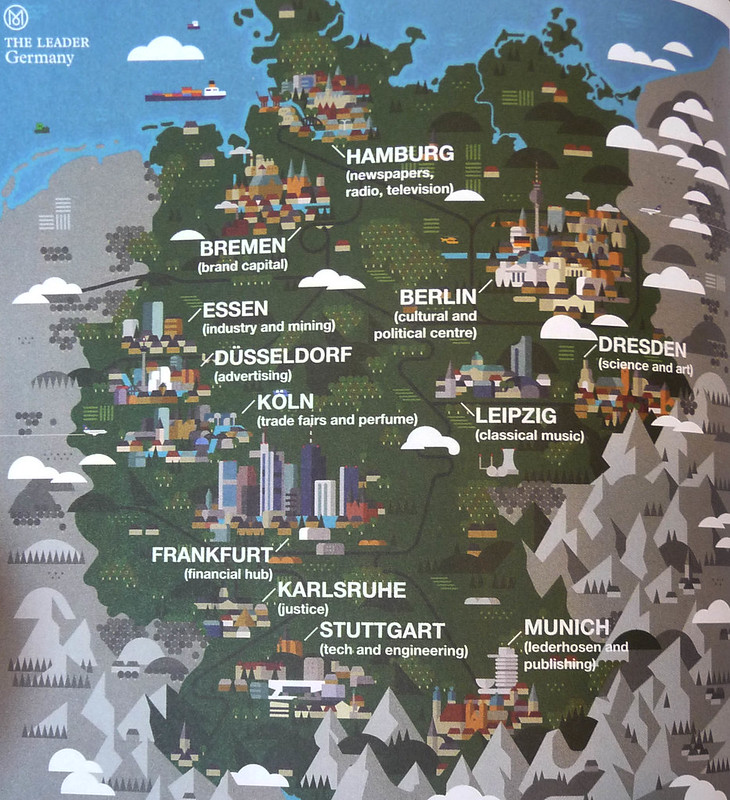
The last (or is it still the current?) edition of Monocle featured a lengthy article on Germany, entitled Boring is Banished. I cannot disagree with them calling the country "home to fresh ideas and new developments," but that definitely wouldn't be the first thing a foreigner arriving in Germany would say. Living as an expat in Germany has had it's challenges, #1 being that they're not an immigrant country (like Canada). As such, I just don't think they're as tolerant towards a wide variety of cultures and nationalities as countries like my home and native land. But as we say o'er here, "Das ist so!"

Nevertheless, the article was still an interesting read. All the cities listed above are indeed known for whatever's written in their corresponding captions (lol, lederhosen in Munich). I agree with Monocle.. "It's time for the world, especially Germans, to embrace a new future." Germany wants so badly to be an international leader (economically and what have you) and the only way I think this can happen is if we put history in the past, set aside notions of staunch tradition and collectively be more open-minded.

Mar 10, 2013

Private Health Insurance for Canadian Freelancers in Germany

German-Flag-with-Maple-Leaf

The aim of this post is help out any other Canadian (or non-EU) Freelancers in Germany who are currently struggling to find private health insurance. Just two months ago, I was in your shoes and I know it ain't a pretty situation. At the time, I needed to find "proper" German health insurance as a requirement to obtain a new Visa in order to stay in the country (the Visa I had was about to expire).

I found a plethora of info on the web about private health insurance in Germany in general, but no one out there could give me a straight answer! All I wanted to know was which private health insurance companies would accept me. The problem was, no one could direct me to one particular company as each company follows a different set of rules (i.e. each company is bureaucratic in its own way).


Truth #1. Relax. At least one German (private or state) health insurance company will accept you.
Truth #2. No, consulting an independent insurance broker is not necessary. Don't waste your money.
Truth #3. There'll be a lot of red tape to deal with. Come to terms with this fact now. Or else.
Truth #4. If you can't speak German fluently, having German friends "speak" for you will be helpful.


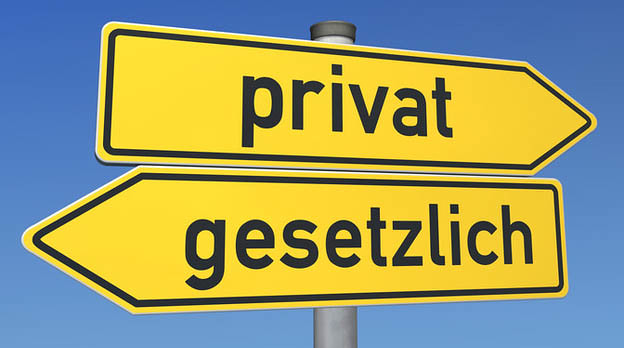
Contrary to popular belief, opting for "gesetzlich" (state) health insurance rather than "privat" (private) health insurance is a possibility. Mind you, as a non-EU Freelancer without previous German health insurance, the process doesn't come without a fight. Fearing the impossible, we gave it a shot at two big name state insurance companies, AOK and TK, before inquiring at any private health insurance companies. Personally, I believe being in the state system is economically and financially better in terms of the long run. Another disadvantage about the private system: it's hard to get out!

Here's what happened: AOK flat-out rejected me. TK, on the other hand, for some miracle accepted me!! The whole process with TK was strange, though. The lady who helped us at the TK office here in Braunschweig made it seem like it'd be impossible to accept me. Then, a few weeks later, I received an acceptance letter in the mail! But by that time, we'd already chosen a private insurance company. Besides, TK wanted to charge me something crazy like 300 Euros/month, which is way too much!

At this point, we'd given up on the idea of getting state health insurance and starting looking into private health insurance companies instead. Here's a list of the companies who either straight-up rejected me or couldn't accept me straight away: DEVK, Öffentliche, Fairversicherungsladen-Wiechers GmbH, HUK-Coburg, Concordia and AXA. I'm still boggled as to why none of these companies could accept me right away. All I know is that the system is insanely bureaucratic. Whatever the reasons were, sadly, at the time it made me feel like an unwelcome foreigner in Germany. But we never gave up hope.

The first company that accepted me right away is the company we ended up choosing (like we even had a choice). The name of that company is Gothaer. The package they offered me definitely isn't cheap, but at least it ain't 300 Euros/month!! I highly recommend Gothaer, but at the same time, I cannot guarantee that they will accept you. That's what's so frustrating about the system! There's a helluva lot of red tape in this industry, and it's just a matter of finding your own loophole through it. As well, always ask for the cheapest package! Most companies'll try to sell ya extra stuff ya don't need.

During this whole ordeal, there was always a Plan B. An unnamed insurance broker (whom I found on toytowngermany.com) was ready to sell me health insurance from an international company called ALC. Though this broker was extremely helpful and friendly, I couldn't be swayed for two reasons: #1) As per the requirements of getting my new Visa, it was important to have German health insurance, and ALC isn't based in Germany (even though it offers its services in Germany). #2) The packages he offered me were decently cheap but honestly just shitty! In the event that I ever needed emergency medical treatment, for example, with these packages I'd still have to pay an arm and a leg!! F that!!

I hope all the above information proves useful for you. Here are some links I found sorta helpful during the private health insurance hunt: How to get health insurance in Germany, Germany Guide: Health insurance. I generally didn't trust any of the Toytown threads about health insurance in Germany because everyone there would just tell me to contact a broker. So explore all your options and do your research! It'll all be worthwhile in the end. Good luck!!! *PS. None of the images in this post are mine.
 

Jan 21, 2013

Life as a Canadian in Germany

Thinking of moving to Germany? If so, then regardless of what country you're from, I hope you'll find the following points useful to know. As seen through the eyes of a Canadian living in a small German city called Braunschweig (pop. 250 500), here's some insight on everything I've observed thus far.

German-Flag-with-Maple-Leaf
[image courtesy of http://archives.canadianpressroom.com]
Geography
  • Take a train ride anywhere in Germany and catch a glimpse of the German countryside: picturesque, pristine and proper. Not to mention, greeeeeeeeeeeeeeeeeeeeeeeeeeeeen.
  • The concept of space and land is madd small. Depending on where one lives in Germany, drive a few hours west, east or south and you'll end up in another country (traveling advantage #1).
  • The North American concept of a "suburb" simply does not exist here. Drive a half hour outside of any city's "city centre" and you'll end up in a different city, town or village altogether.
  • Most towns and cities are laid out in a circular pattern as opposed to a grid pattern. An iconic church and market square is usually located dead smack in the middle of the city centre.
Climate
  • The climate in this part of Germany (the north) is very similar to the weather I grew up with in Toronto. Here in BS, however, we get wayyy more cloudy and rainy days all throughout the year. The summers also don't seem to get as hot (e.g. we never had over 30°C days last summer).
Politics
  • I won't pretend I know much about German politics, but my experience with government officials so far isn't positive. I believe the system is &*$#ing bureaucratic and excessively complicated.
Economy / Infrastructure
  • Germany's economy depends on its automobile industry. On this note, I've come to notice that technical jobs (e.g. engineers) are seen as more respectable than all other types of jobs.
  • Hands-on jobs (e.g. chefs) and jobs in the trades (e.g. plumbers) aren't paid well. Pity!
  • Hoorah for the bike culture!! Most cities, towns and villages in Germany are bike-friendly. Love love effing love that there are bike lanes everywhere!!! This has honestly changed my (previous commuter) lifestyle by 360° and I couldn't feel/be healther/happier. You ready to ditch your car?
Religion
  • Don't declare that you're "Catholic" on your papers here, even if you are. You'll have to pay 8%-9% of your income tax to the church or community to which you belong. That is heaps!!!
Languages
  • Most people under the age of 30 can speak basic English. Still, it's nothing like the Netherlands or the Scandinavian countries, where even the elderly folks can speak a basic level of English. 
  • There's a high demand for English teachers all over the country because people of all ages desire to either learn or to improve their English (*nudge *nudge to all you native speakers).
Education
  • Having "papers" are very important. Employers, for example, are more interested in the certificates or diplomas proving you've completed a course or that you've obtained a degree. 
  • Huge difference between the uni students in Germany vs. the uni students in North America: here, tuition costs are affordable. Uni students aren't caught up in a never-ending cycle of debt.
Culture
  • Hands-down, Germany is not an immigrant country like Canada, Australia, the US, etc. Contrary to the society I grew up in, it just isn't a "mixed bag" of cultures here. The largest number of immigrants here come from Turkey. I just kind of miss seeing other Filipino people around :(
  • Generally speaking, Germany is less open to new ideas and change in comparison to countries like Canada. For example, people seem to prefer stabile jobs over entrepreneurialism. Yuck.
  • "New" ideas catch on 10-15 years later (the bubble tea fad just arrived here a few years ago).
  • It's true, most Germans (not all!) have a standoffish, direct approach. I'm talking specifically about people you'd meet in public. You might consider it rude - but don't take it personally.
Food
  • Good Asian food (e.g. a proper bowl of pho or bibimbap) is damn hard to find, unless you live in a big city. But even then, I have yet to try mind-blowing Asian food in Berlin or Hamburg.
  • It seems to me that Germans have a salt tooth. Their Asian food, for example, is super salty!
  • Germans aren't big fans of peanut butter. Though they do enjoy their Erdnussflips. Strange, eh?
  • All the ice cream people eat here is really Italian-style gelato. And you can get a scoop from any ol' ice cream shop for as little as 0,70€ - much cheaper than a scoop from Laura Secord!
  • Sadly, ain't no Tim Horton's-style cheap coffee joints here. A cappuccino goes for at least 2€.
  • German fast food = döner or currywurst. McDonald's and Burger Kings are less frequented.
  • There's a little bakery on every corner. People love buying fresh bread rolls in the morning.
  • Rather than a few humungous superstores in town, there are little supermarkets everywhere.
Fashion
  • One word: BLAND. I hate to be blunt but seriously, the styles here are really effing bland.
  • People seem scared to rock anything super colourful or out of the ordinary. Scurred folk!!!

Miscellaneous
  • Drinking in public is legal. That's right, l-e-g-a-l. Feel free to ride your bike with a beer in hand.
  • All abandoned empties will be snatched up! You pay a fund for them when you purchase them, of which you can get back so long as they're returned. So save all your empty bottles and cans! 
  • People are more open about sex and sexuality in general. The women in my fitness classes get naked in the change rooms like it's nothing at all. Kids see boobs on TV at early ages.
  • Strangers (mostly old folk) on the street can and will scream at you! If you're biking on the wrong side, or do anything at all that they deem to be inappropriate, be prepared to get an earful!
  • Tell people you have a driver's license but can't drive a standard car and you will be made fun of.
  • Only on New Year's are Germans allowed to go buck wild. It'd call it absolute anarchy for 24 hours straight. People light fireworks and party on the streets the entire night and into the a.m. 

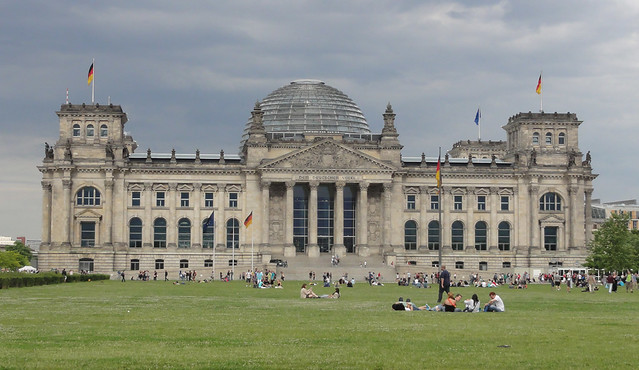
reichstag

As a Canadian expat in Germany, naturally, the thing I miss the most is multiculturalism. It's much more evident in Berlin, but not so much in our little city. I just miss being able to eat every type of cuisine in the world all in one city (and being able to grab a Jamaican patty at my whim). Having said that, however, I've gained experiences here I'd never have the chance to do anywhere else. Over the past year I've learned to speak German and damn proud of it! In the future, I picture myself forever living in various countries. For me, experiencing different cultures is a lifelong thing. #staypassionate

Mar 20, 2012

Traveling Abroad vs. Living Abroad

travelingvsliving

Traveling a country as a tourist is completely different from living in a country as an expatriate. Don't get me wrong, I love being a gawker of sights too. But completely immersing oneself in a country's culture by choosing to live there is an experience unparalleled with anything else in the world! I can't even begin to explain how rewarding it is to be able to contribute to a society rather than just pass by it. People always complain about not having enough vacation time from their 9-5s. Here's a nutty idea: instead of traveling (insert your country of choice here) for 2 weeks, stay for a year instead.

I understand that the choice to live abroad isn't realistic for everyone. Just know that YOU are free to live the life that YOU want to live! Life in Germany has challenged me in extraordinary ways thus far. The thick-skulled ones still think I'm here on holidays. In actuality, I've been busting my butt trying to find career-oriented work while simultaneously teaching myself German. But I'm not complaining, not one bit. I've learned life skills that I'd never had learned if I'd stayed in Toronto. Despite the frustrations married to this lifestyle, I feel alive and that's all that matters.